
ThinkStart / Business Transformation
CHANGE,
DECODED.
Stop reacting.
Start adapting.
ThinkStart aligns your people, technology and strategy so change becomes easier to understand and act on.
We help organizations build stronger teams, make faster decisions and turn change into measurable business gain.
Where We Help
Change rarely arrives one piece at a time.
A new technology changes the work. New work changes what people need to know. New expectations change how leaders communicate and decide.
ThinkStart helps connect those moving parts.
Strategy
Decide what matters, what should change and where to focus first.
Workforce
Give people the skills, context and confidence to work differently.
Knowledge
Make information easier to find, share, retain and use.
Technology
Apply digital tools, automation and AI where they improve the work.
Communication
Help leaders, teams and audiences understand what is changing and why.
How We Work
From change to gain.
We start with the business problem, not the technology. Then we align the people, knowledge and tools needed to move it forward.
Get clear.
Understand what is changing, where the opportunity is and what the organization needs.
- Leadership alignment
- Opportunity reviews
- Business priorities
- Change communications
Bring people with you.
Build capability around real work instead of asking teams to figure out new systems alone.
- Workforce enablement
- Adult learning
- Manager support
- Practical AI training
Improve the work.
Fix where information gets lost, work gets repeated or valuable knowledge stays trapped.
- Knowledge management
- Workflow improvement
- Automation
- Implementation partners
Prove the gain.
Measure whether change creates a stronger, faster and more capable organization.
- Time and capacity
- Quality
- Workforce confidence
- Business outcomes
Find Your Starting Point
Start with the problem. Not the platform.
You do not need to arrive with a transformation plan. Start with what is slowing the organization down, creating uncertainty or getting in the way of better work.
Leadership direction, transformation planning and opportunity reviews.
Workforce learning, adoption, executive briefings and change communications.
Knowledge management, Microsoft 365, Google Workspace and information flow.
Workflow review, automation and practical technology improvement.
Adoption, governance, AI strategy, training and measurable use.
Breakfast Television · October 27, 2026 · Free Family Resource
The Dreadlines Digital Checkup
Are we raising kids to fear the internet—or understand it? Five quick questions about fake news, AI content and smarter digital habits.
Get practical tips instantly. No email required.
YOUR FAMILY DIGITAL CHECKUP
Your three next steps
Get the family resource and occasional digital literacy updates
Email is optional. Taking the checkup does not subscribe you to anything.
The Operating Question
Is the organization actually getting better?
New tools, workshops and strategies are activity. The measure is what improves after they are introduced.
Where are we now?
Understand the work, workforce, information, technology and risks.
What needs to move?
Set priorities, prepare people and improve the way the work gets done.
Did it work?
Measure time, quality, capability, cost and organizational gain.
Experience Across Change
Technology is only part of the story.
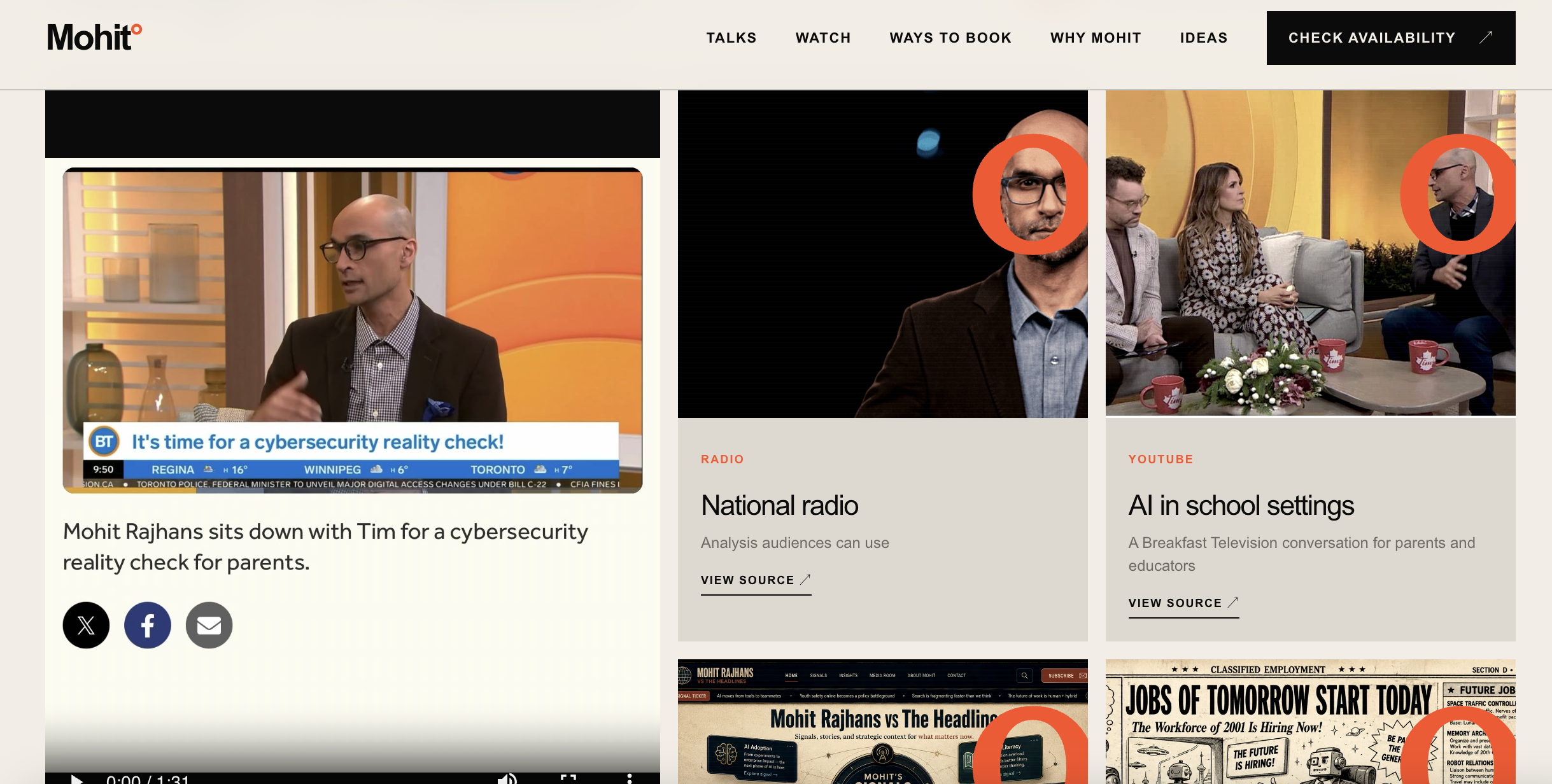
ThinkStart founder Mohit Rajhans brings more than 20 years of experience across media, communications, education and emerging technology.
That matters because transformation rarely happens inside one tool or one department.
The advantage is not knowing every button. It is knowing what should change because of them.
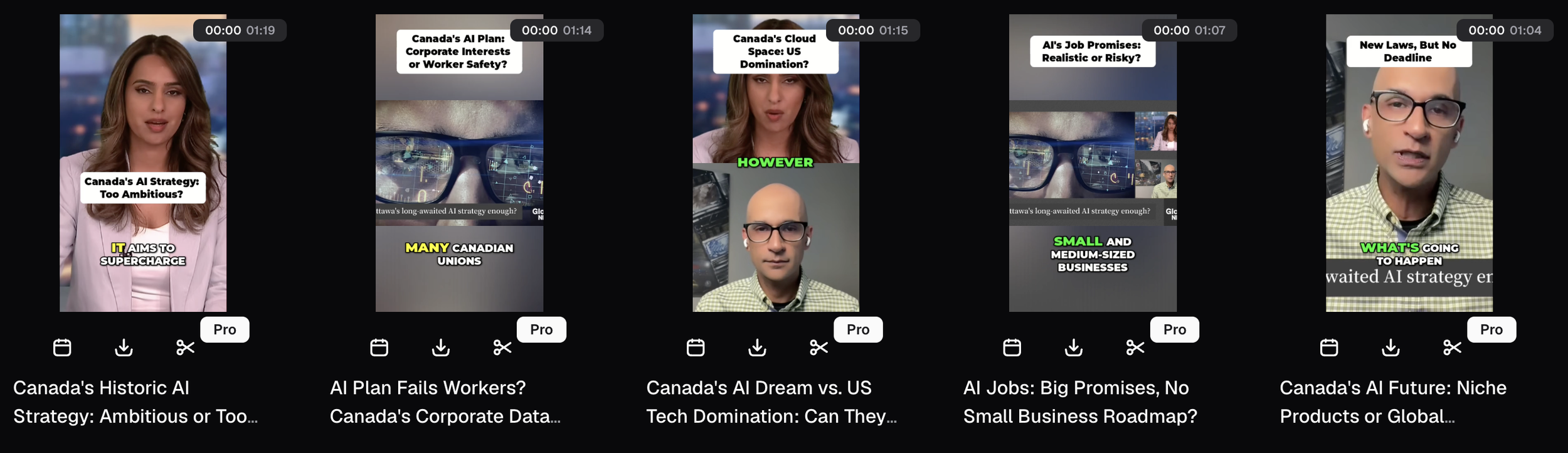
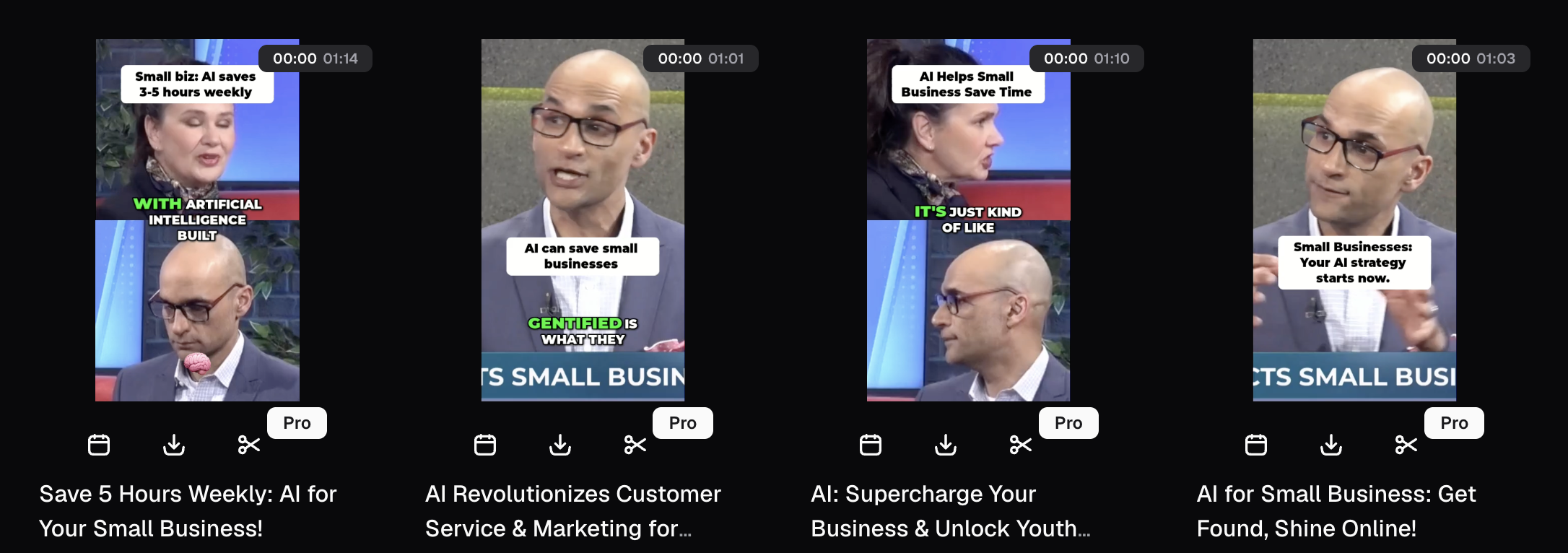
Mohit Rajhans on navigating technology, work and organizational change.
Featured Digital Resource
Canada Training Brain Trust
Find the training. Understand the support. Choose your next step.
An interactive Canadian resource bringing together AI learning programs, funding and support information, and trusted provider links.
Explore opportunities and compare eligibility, costs and learning pathways.
Explore the resource →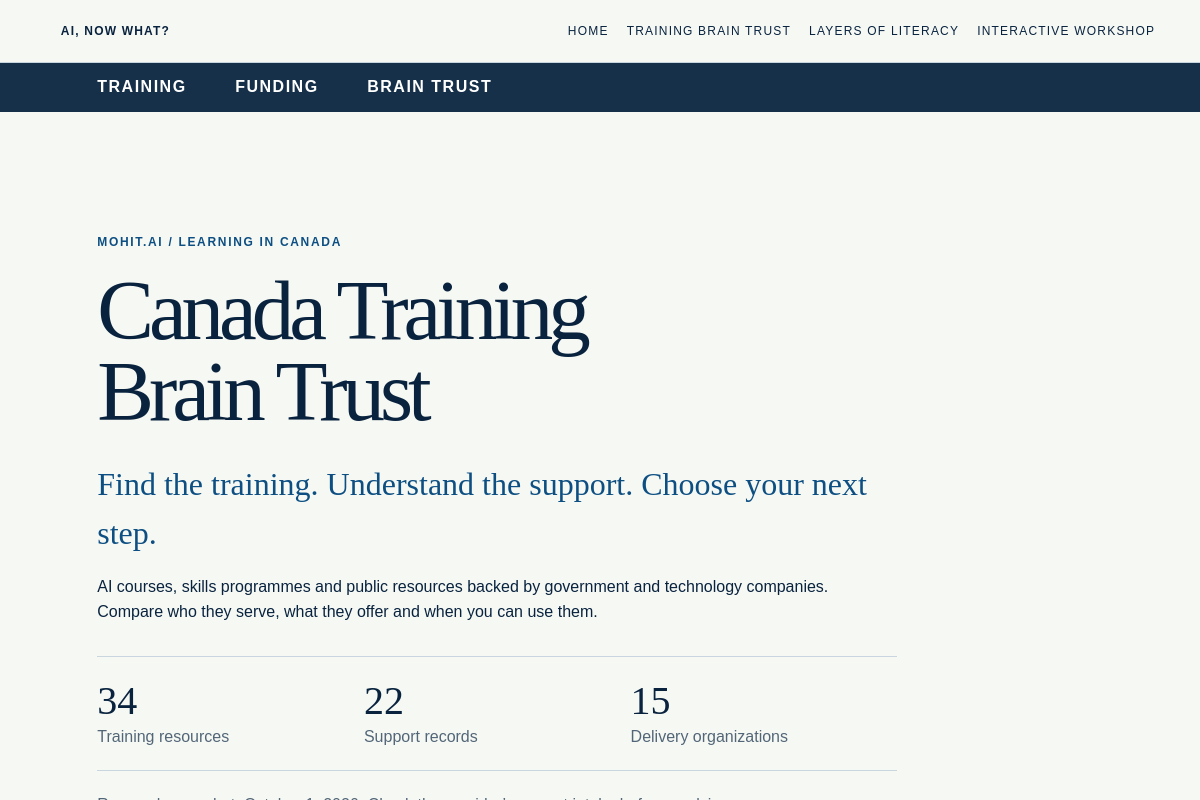 Mohit.AI / Canada Training
View site ↗
Mohit.AI / Canada Training
View site ↗
Selected Areas of Work
Strategy · Digital transformation · Change management · Organizational readiness · Business improvement
Executive learning · Adult education · Workforce enablement · Train-the-trainer · AI literacy · Media literacy
Knowledge management · Microsoft 365 · Google Workspace · Automation · Copilot · ChatGPT · Gemini · AI agents
Strategic communications · Media · Search · Content · Audience development · Digital publishing
Make Change Make Sense
Your next change should make the organization better.
Whether the challenge starts with people, knowledge, technology, communications or AI, start with the outcome you need to improve.
Talk to ThinkStart →Media and AI consultant Mohit Rajhans discusses the federal government’s launch of an AI literacy course, and whether it is the right path.